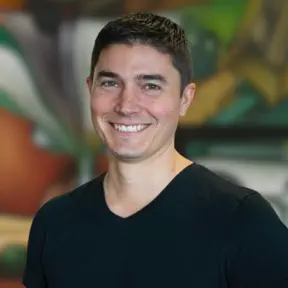
In-AI Advertising: Better Answers for Users, Big Questions for Society, with ZeroClick's Ryan Hudson
"The Cognitive Revolution"
September 3, 2025
Today Ryan Hudson, Founder and CEO of ZeroClick, joins The Cognitive Revolution to discuss creating advertising infrastructure for AI applications through paid inference-time consideration of advertiser content, examining how to build sustainable monetization for free-tier AI services while...
Speakers Nathan Labenz, Ryan Hudson
TopicsTechnologyBusinessEntrepreneurship
SPEAKER_1 (0:00)
This podcast is supported by Google. Hey, everyone. Srishtha here from Google DeepMind. The Gemini 2.5 family of models is now generally available. 2.5 Pro, our most advanced model, is great for reasoning over complex tasks. 2.5 Flash finds the sweet spot between performance and price. And 2.5 Flash Lite is ideal for low latency, high volume tasks. Start building in Google AI Studio at ai.dev.
Nathan Labenz (0:31)
Hello, and welcome back to The Cognitive Revolution. Today, my guest is Ryan Hudson, founder and CEO of ZeroClick, a company that's just announced a $55 million fundraise to build a native advertising platform for AI systems, with the goal of making ad-supported free tiers a viable and convenient option for AI application developers through what they call paid context, or paid inference time consideration of advertiser content. This topic and this conversation are both great examples of why I love making this show. In addition to the many fascinating technology, business, and product questions this vision requires Ryan and team to invent answers for, their eventual success will also bring many big-picture societal questions straight to the floor. And considering that Ryan was previously founder of the online shopping company Honey, which sold to PayPal for $4 billion, that does seem pretty likely. To lay my cards on the table, I think that the benefits of advances in advertising technology are greatly underappreciated today. I'm old enough to remember when broadcast and cable TV were dominant, and we were all bombarded with the same mass-market, lowest-common denominator ads over and over again. It was a simpler time to be sure, but it really wasn't all that awesome. Today, in part because of the internet itself, but also very much downstream of sophisticated advertising technology, a huge number of content creators can make a living doing what they love. Small-time entrepreneurs can build all kinds of long-tail niche businesses that previously would have been impossible. As consumers, we enjoy an incredible diversity of product and service offerings, and the advertisements we see online are generally far more relevant to each of us as individuals. That reality is not something to take for granted, and as people increasingly turn to AI for help exploring and navigating the far reaches of this vast commercial world, it's only natural that some sort of native advertising will emerge for AI services just as they previously did for social media. At the same time, the second-order effects of the social media advertising revolution, especially in light of recent issues with AI sick fancy and the emerging social trend of AI psychosis, does leave many people feeling, understandably, very nervous about in-AI advertising. Simply put, how do we make sure that the AIs we use on a daily basis are truly serving us? And not just when it comes to recommending products in response to specific queries, but more broadly, when it comes to helping us live our best lives and not just trying to capture as much of our time and attention as possible. To his credit, Ryan did not shy away from any of these questions. We get into details of how the platform works, including the mix of technologies they use to match user queries with active ad campaigns as quickly as possible, and also the MCP server integration that allows developers to plug into ZeroClick with minimal friction. We also unpack the business strategies they're pursuing to build liquidity in a new market, including their focus on becoming the stripe for AI advertising, providing common infrastructure so that developers don't have to rebuild monetization for themselves, and also their approach to starting with high-intent commercial searches before expanding to more discovery-oriented advertising. Along the way, we also discuss the big-picture questions around the incentives that ad-supported business models create for app developers, particularly in relatively uncharted spaces like AI Boyfriends and Girlfriends, and also look at how a platform like ZeroClick should think about handling non-commercial advertisers such as political campaigns and even foreign governments. As you'll hear, Ryan has strong answers on the tech and business level, as you'd expect from a seasoned founder. But he hasn't yet had to confront some of the longer-term questions, and in a few cases, he candidly admits that he simply hasn't got around to thinking about such things much at all. On one level, this is to be expected and really is totally understandable. ZeroClick is a young startup that is still zeroing in on product market fit in a super fast-evolving space. And I genuinely appreciate that Ryan was willing to say, I don't know. At the same time, I think this does reflect a real issue in the AI space right now, which extends far beyond advertising. The reality is that today, everyone is working incredibly hard to achieve the next research breakthrough, to make their products work as well as possible, and to stay ahead of the competition. 996, or 12-hour days, six days a week, is now considered baseline in the Bay Area AI startup scene. That means fast progress and frequent releases, which is great for companies and their customers. But it also means that very few people have the luxury of zooming out and really taking time to ask what happens when they and others pursuing similar goals finally succeed. This issue importantly does run deeper than the application layer. I recently saw a remarkable interaction on Twitter where Miles Brundage, previously head of policy research at OpenAI, described a letter that OpenAI had sent to California Governor Gavin Newsom about a pending California bill, SB53, as quote, filled with misleading garbage. Only to have a current OpenAI researcher quote tweet and say that, like most researchers, this policy stuff goes largely over my head. When the people building transformative technology, even at what remains, for now, a non-profit entity with the explicit mission of making AI that benefits all humanity, are two heads down to engage with AI's implications, it's really not a great situation for society as a whole. Bottom line, I think Ryan and ZeroClick are likely to be successful. Ad-supported, free-to-use AI applications make a lot of sense economically, and if done well, will often genuinely enhance the user experience by providing relevant commercial information when people need it. And yet, with the speed that things are currently moving, I believe it is also incumbent on the people building the future to think farther ahead than is usually considered necessary in startup culture, and to make sure that they have conviction not only that they can build a winning business, but that their impact will be something they can truly be proud of. Ryan and the team at ZeroClick will be one to watch in this regard. I don't doubt their commitment or their ability to deliver high-quality ad experiences, but if they want to contribute to the building of a holistically better future for all humanity, I suspect they'll ultimately be called on to do quite a bit more than that. With that, I hope you enjoy the thought-provoking exploration of AI advertising, market incentives, and the challenge of building beneficial technology at breakneck speed. With Ryan Hudson, founder and CEO of ZeroClick.
87 more minutes of transcript below
Thousands of transcripts fetched by people building searchable podcast archives
Fetch the whole transcript
The demo key returns a sample episode in full, no card needed:
curl -H "x-api-key: pt_demo" \
  https://spoken.md/transcripts/1000651996090
Markdown with the speakers named, for your notes, your knowledge base, or anything that makes HTTP calls.
From $0.10 per transcript. No subscription. Credits never expire. Prices exclude VAT, added at checkout for EU customers. Not what you expected? Email us within 14 days with 20 or fewer credits used and we refund the pack in full.
Using your own key:
curl -H "x-api-key: YOUR_KEY" \
  https://spoken.md/transcripts/1000724830875