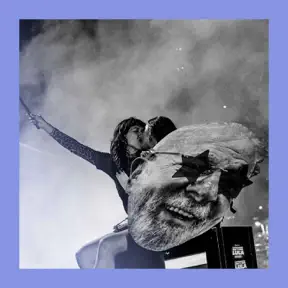
From this day, fourth: Lula’s surprise win
Economist Podcasts
October 26, 2026
Brazil’s president, Luiz Inácio Lula da Silva, staged a historic comeback to win a fourth term. We ask how he did it, and what he must do next. Each day this week our correspondents in America are focusing on crucial midterm-election races; today we start in Texas.
Jason Palmer
The Economist.
Hello and welcome to The Intelligence from The Economist. I'm Jason Palmer.
Rosie Blau
And I'm Rosie Blau.
Jason Palmer
Today on the show, the first of this week's segments on crucial American midterms races and why even that little coffee shop around the corner sells tote bags. But first...
In the small hours of the morning, the streets of São Paulo were teeming. The results of Brazil's second round presidential election were in...
SPEAKER_3
President Luiz Inácio Lula da Silva was re-elected and will be the 40th president of the Federal Republic of Brazil.
Jason Palmer
With very nearly every one of 64 million votes counted, President Luiz Inácio Lula da Silva, or more popularly just Lula, received 52%. For his opponent, Flávio Bolsonaro, son of the former president Jair, 48%. Lula himself, a horse from all the celebrations, addressed the crowd in Sao Paulo.
This is a historic achievement that I owe to the Brazilian people, he said.
Ana Lankes
Brazil is a country that loves a dramatic political comeback. But even by Brazilian standards, last night's comeback was remarkable.
Jason Palmer
Ana Lankes is our Brazil bureau chief.
Ana Lankes
No presidential hopeful since the return of democracy in 1985 had lost the first round of voting and gone on to win the runoff. Lula now has. Which means that he joins an exclusive club of presidents who have won four terms democratically alongside Franklin Delano Roosevelt.
Jason Palmer
When last we spoke about this election, you said Lula had a very, very narrow path to victory.
Ana Lankes
Yeah, he was definitely expected to lose. So on the first round of voting on October 4th, Lula trailed Flávio Bolsonaro by two million votes.
And three of the four other candidates who were knocked out all backed Flávio. In between them, they had gotten 8% of votes. So all those votes were expected, essentially, to go to Flávio.
Voters also appeared to be sick of Lula's workers' party, which has been in power for 18 of the past 24 years. In my travels across the country, I really sensed a desire for change, especially in the main swing state, Minas Gerais. And all polls put Bolsonaro ahead. Yet in less than three weeks, Lula gained an extra 10 million votes, which is unbelievable.
Jason Palmer
How did he do it?
Ana Lankes
So first, he made a really important tactical overhaul. Before the first round of the election, he ran a very boring analog campaign. He spent, for example, only $500,000 on boosting his online content, compared with $2 million by Bolsonaro.
He focused on issues that a lot of Brazilians felt were a bit abstract, like how to add value to Brazil's mineral exports, or how to defend sovereignty. When most Brazilians were really, you know, cared more about bread and butter issues. But between the two rounds, he massively changed tack. So he began posting selfie videos on Instagram. This is a man who didn't previously have a mobile phone.
And a 42-year-old evangelical congressman from Minas Gerais, the country's most important bellwether state, Andre Janomes, started supporting him with social media and a WhatsApp channel called Lula's Army. This WhatsApp channel attracted over 10 million members in just two weeks. And what Janomes did was send its members missions where they had to repost stuff about Lula. And that helped Lula basically become a trending topic on social media in the final stretch of the campaign. It kept him more relevant than the right online.
Jason Palmer
So this was mostly about him simply being present on people's phones more than he was before.
Ana Lankes
It was definitely partly that. There was also a lot more energy in the campaign between the first and second rounds of the election. The Lula campaign organized these massive rallies, attracting hundreds of thousands of people across major cities in Brazil. And they invited big celebrities and there was this big carnivalesque atmosphere. I went to one of the rallies here in Rio de Janeiro and it really felt like a party.
But another very important factor was the fact that Lula opened the spigots. He raised handouts in Brazil's flagship welfare program. He managed to get Congress to pass a law that reduced the workweek from 44 hours to 40 hours without pay cuts. He pledged to make public transport free on weekends. He promised to forgive federal debts for what are called individual micro-entrepreneurs, so sole traders like plumbers or manicurists, barbers. He promised to hand out $1,000 to a million of them.
So this is going to be very expensive. Incumbents in Brazil often make lavish giveaways before elections. But even by Brazilian standards, Lula has been generous. On election day, I talked to a lot of people on the street. And my impression was that many were afraid that if Flávio were to win the presidency, they would lose their social benefits, including welfare handouts.
Read the other 18 minutes of this episode here.
$15 gets you this episode and 99 more. Credits never expire. After checkout, one link brings you back here to read it.
Not what you expected? Full refund within 14 days.
Thousands of transcripts fetched by people building searchable podcast archives
Fetch transcripts with code
The same credits work from a script or an AI agent. The demo key returns a sample episode in full, no card needed:
curl -H "x-api-key: pt_demo" \
  https://spoken.md/transcripts/1000651996090
Markdown with the speakers named, for your notes, your knowledge base, or anything that makes HTTP calls.
From $0.10 per transcript. No subscription. Credits never expire. Prices exclude VAT, added at checkout for EU customers. Not what you expected? Email us within 14 days with 20 or fewer credits used and we refund the pack in full.
Using your own key:
curl -H "x-api-key: YOUR_KEY" \
  https://spoken.md/transcripts/1000798160719