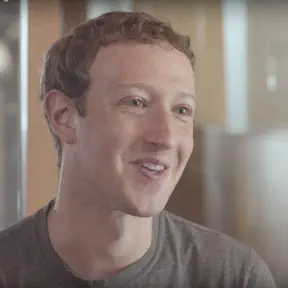
#16 - Mark Zuckerberg on How to Build the Future
Y Combinator Startup Podcast
July 7, 2017
Mark Zuckerberg is the cofounder of Facebook. Sam Altman is the president of YC Group and he interviewed Mark for a series called How To Build The Future, which you can watch on YC’s YouTube channel.
Speakers Craig Cannon, Sam Altman, Mark Zuckerberg
TopicsTechnology
Craig Cannon (0:00)
Hey, this is Craig Cannon, and you're listening to Y Combinator's podcast. Today's episode is with Mark Zuckerberg and Sam Altman. Sam's the president of YC Group, and he interviewed Mark for a series called How To Build The Future, which you can check out on our YouTube channel.
All right, here we go.
Sam Altman (0:13)
Welcome to How To Build The Future. Today, our guest is Mark Zuckerberg.
Mark, you have built one of the most influential companies in the history of the world, so we are especially excited that you are here.
Mark Zuckerberg (0:22)
I'm not sure where to go from there.
Sam Altman (0:25)
Why don't we start with just the early days of Facebook? Tell us what it was like when you started it.
Mark Zuckerberg (0:30)
Sure.
So, for me, the thing that I was really fascinated by, and always have been, is people, right? And how people work. You know, when I was in college, I studied psychology and computer science. And one of the things that you learn when you study psychology is that there are all these parts of the brain which are geared just towards understanding people, right, understanding language, how to communicate with each other, understanding facial expressions, emotions, processing.
Yet when I looked out at the internet, right, in 2004, which is when I was getting started, you can find almost anything else that you wanted, right? You could find news, movies, music, reference materials. But the thing that mattered the most to people, which was other people, and like understanding what's going on with them, it just wasn't there, right? And I think what was going on was that all that other content was just out there able to be indexed by search engines and other services. But in order to understand what's going on with people, you needed to build tools that made it so that they could express what was going on with themselves. I wanted to figure out what courses to take, so I built this little website course match that just made it so that you could enter what courses you were taking, and you could click on them and see who else was in them. And it did all these correlations, so it told you people who took this course were likely to enjoy this course too. And the thing that just struck me from the beginning is people would just spend hours clicking through. Here are the courses that people are taking, and wow, isn't it interesting that this person is interested in these things? And it was just text, right? There was nothing that was super interesting there. But that just struck me as people have this deep thirst to understand what's going on with those around them.
And there were probably 10 other things like that that I built when I was at Harvard before I actually got around to building the first version of Facebook that kind of added a lot of these things together.
Sam Altman (2:30)
Did you think Facebook was going to be a company when you started?
Mark Zuckerberg (2:33)
I built the first version of Facebook because it's something that my friends and I wanted to use at Harvard, a directory and a way to connect with the other people around us. And I didn't think at all that it was going to be a company. I remember very specifically the night that we launched the first version. I went out to get pizza with a couple of my friends who now work here.
And I remember really clearly, we were talking about how one day we thought that someone was going to build a community like this for the world, and that that would be some company. But it clearly wasn't going to be us. I mean, it just wasn't even...
Sam Altman (3:15)
It didn't even occur.
Mark Zuckerberg (3:17)
Yeah, no, I mean, it wasn't even an option that we considered that it might be us. I mean, we just weren't focused on building a company back then. We were just building something that we thought would be useful at our school.
Sam Altman (3:29)
So as you look back, is there something that made Facebook different from the other projects that you had built that allowed it to turn into this, the company it is today?
Mark Zuckerberg (3:39)
Um, well, for one, I think we kept going, right? So, I mean, the others, I mean, CourseMatch and, you know, just the other different crowd source tools, you know, they kind of serve their purpose and then we were done. Whereas with Facebook, there was just such, you know, people loved it, right? And had such an intensity of using it. I think within a couple of weeks, two thirds of students at Harvard were using it. And all these other students at MIT and other local universities were writing in, asking us if we could open up Facebook at their school. So we kind of just followed that, right? And, you know, again, I didn't set out, and my roommates didn't set out to build a service that we were gonna turn into a company, but we just kind of followed what people wanted. And that led us to expand it to all these other schools and eventually beyond schools. And at some point, once we'd hired a bunch of people, we decided to turn it into a company and go for this mission of connecting the world.
22 more minutes of transcript below
Thousands of transcripts fetched by people building searchable podcast archives
Fetch the whole transcript
The demo key returns a sample episode in full, no card needed:
curl -H "x-api-key: pt_demo" \
  https://spoken.md/transcripts/1000651996090
Markdown with the speakers named, for your notes, your knowledge base, or anything that makes HTTP calls.
From $0.10 per transcript. No subscription. Credits never expire. Prices exclude VAT, added at checkout for EU customers. Not what you expected? Email us within 14 days with 20 or fewer credits used and we refund the pack in full.
Using your own key:
curl -H "x-api-key: YOUR_KEY" \
  https://spoken.md/transcripts/1000389630022