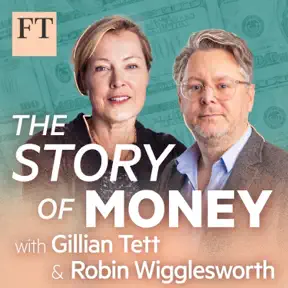
The Story of Money: The trader who made $100mn from the 1929 crash — only to lose it all
Unhedged
August 4, 2026
Today, we're bringing you an episode from another podcast in the FT stable: The Story of Money. Jesse Livermore was a legendary trader who made and lost several fortunes in the early 20th century, most famously by shorting the Wall Street crash of 1929.
Speakers Robert Armstrong, Robin Wigglesworth
TopicsInvestingBusinessNewsBusiness News
SPEAKER_1 (0:00)
What happens next in The Story of Money? Nuveen has spent over 125 years helping clients answer this question. By investing in the growth of businesses, real estate, infrastructure and natural capital, we continue to deepen our expertise across income and alternatives so investors can confidently write the next chapter of their own portfolio stories. Nuveen. Invest like the future is watching. Visit nuveen.com/future to learn more. Investing involves risk. Principal loss is possible.
Robert Armstrong (0:30)
Hey listeners, Unhedged is taking a short break today, so we wanted to introduce you to one of our sister podcasts, The Story of Money. It's a weekly history show for finance geeks, or if you prefer, a weekly finance show for history geeks. It explores the ideas, personalities, and institutions that have shaped the history of money, and it's hosted by Gillian Tett and Robin Wigglesworth. The episode you're about to hear tells the extraordinary story of legendary trader Jesse Livermore, who made $100 million by shorting the Wall Street Crash of 1929, only to lose his fortune just a few years later. Even better, this episode features me as a guest.
Enjoy the show, and don't forget to follow The Story of Money wherever you're listening. You can also watch on YouTube.
He would walk into stockbroker's offices and they'd think he was a naive kid when in fact he was an absolute shark and would clean the place out.
Robin Wigglesworth (1:33)
I mean I found this great quote that apparently he gave to his kids. The only way to get a real education in life is to examine each and every one of your mistakes.
Robert Armstrong (1:42)
Yeah and isn't that the truth on Wall Street in life? It's the very same thing.
Robin Wigglesworth (1:48)
I think what's so compelling about Jesse Livermore is that he does learn from his mistakes. Most of the time, at least.
Robert Armstrong (1:54)
Bad investors, what they do and what I've done when I've made mistakes, is you think you lost because it was a coincidence. Livermore never does that.
Robin Wigglesworth (2:04)
Yeah.
Robert Armstrong (2:05)
The only thing that is winning is making money and if you lose and lose money, it's because you were wrong, not because you were unlucky.
Robin Wigglesworth (2:22)
Today, on The Story of Money, how do you make 100 million bucks when marks are crashing and everyone else is losing their shirt and then somehow blow it all? Well, today we're going to be talking about one of history's most legendary traders, Jesse Livermore. He made a cool 100 million dollars in the Great Crash of 1929
That's actually one and a half billion dollars in today's money. Or if you want to scale it relative to the size of the US economy back then and now, around 30 billion dollars. One of the biggest trading halls in history. He was a larger than life character who went from Massachusetts farm boy to champagne soaked parties in New York.
He even helped inspire F. Scott Fitzgerald's Jay Gatsby. He's basically the patron saint of day traders everywhere. But tragically, just like Jay Gatsby, Livermore's rise was matched by a catastrophic fall. Now, Gillian is away today sadly, so it's just me this week. I'm Robin Wigglesworth and this is the story of money from the Financial Times.
To get into the story of Jesse Livermore, I am joined by a very special guest, Robert Armstrong, who like Livermore, is a bit of a Renaissance man. You may know as the FT's US Financial Commentator, or as the host of the Unhedged Podcast, or as the writer of the Unhedged Newsletter. For me, he'll always be the FT's best style columnist. He also was a headshot analyst back in the day as well. So Rob, thanks so much for being here today.
Robert Armstrong (4:13)
It's a great pleasure to join the show.
Robin Wigglesworth (4:15)
So Rob, when did you first hear of Jesse Livermore?
Robert Armstrong (4:18)
When I first started working on Wall Street, there was a small handful of books that was pressed upon me, as the founding literature of the profession, that every young man on the road to making money in speculation should read. And one of them was a book called Reminiscences of a Stock Operator, which was written by a journalist called Edwin Lefèvre. And it's a roman à clef about Livermore's life, told in Livermore's voice.
Really, it's a sort of as told to autobiography, but he never mentions his own name. It's almost in the style of a novel, but it's this incredible, vivid, autobiographical testament to not only the ups and downs of Livermore's, the early and middle part of his life, but also his approach to trading stocks. As a result of this book, the way Livermore thought and talked is kind of burned into the minds of a lot of people on Wall Street.
44 more minutes of transcript below
Thousands of transcripts fetched by people building searchable podcast archives
Fetch the whole transcript
The demo key returns a sample episode in full, no card needed:
curl -H "x-api-key: pt_demo" \
  https://spoken.md/transcripts/1000651996090
Markdown with the speakers named, for your notes, your knowledge base, or anything that makes HTTP calls.
From $0.10 per transcript. No subscription. Credits never expire. Prices exclude VAT, added at checkout for EU customers. Not what you expected? Email us within 14 days with 20 or fewer credits used and we refund the pack in full.
Using your own key:
curl -H "x-api-key: YOUR_KEY" \
  https://spoken.md/transcripts/1000779938167