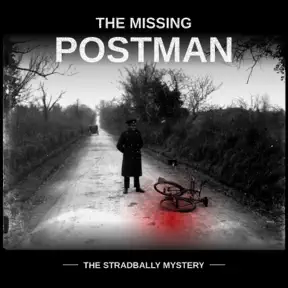
The Mystery of the Missing Postman: Silence in an Irish Village
Irish History Podcast
October 7, 2026
On Christmas Day 1929, postman Larry Griffin disappeared from Stradbally, Co. Waterford. His bicycle was found abandoned outside the village. While evidence suggested his disappearance was suspicious, the case became an enduring mystery.
Speakers Fin Dwyer, Fachtna Ó Drisceoil
TopicsHistory
Fin Dwyer (0:07)
Christmas, 1929 would prove to be a fateful day in the history of a small Irish village, Strad Valley in County Waterford. Because on that day, the village postman, Larry Griffin, a popular man by all accounts, disappeared. His bicycle was found abandoned on the road outside the village, and there were indications of possible foul play. The bicycle appeared to have been tampered with, while many found its positioning suspicious. It looked like it had been placed on the road. Furthermore, Larry himself was nowhere to be seen. Now the postman's disappearance prompted a major investigation by the Garda, but despite testimony from one member of the local community and several arrests, Larry Griffin's body has never been found.
Griffin's suspicious disappearance has for nearly a century been the centre of a tragic controversy. Despite a massive Garda investigation in late 1929 and 1930, they were faced with a wall of silence in a village where many people professed to no one like Larry Griffin. Indeed, that investigation and the reactions of the people of Strad Valley reveal a complicated and at times dark picture of the often idealised village life of early 20th century Ireland. The case also challenged the notion that post-independence Ireland was a deeply pious country. While many refused to aid the Gardaí, locate a man they socialised with, the mystery was also wrapped up in illicit parties and austere attitudes to sex at the time and a general unwillingness to cooperate with the authorities.
In this episode, I explore the story behind one of Ireland's most famous disappearances and what it reveals about village life in Ireland in the early 20th century.
Hello and welcome to the Irish History Podcast. My name is Finn Dwyer. Now my guest on today's show is Fachtna Ó Drisceoil, the author of The Missing Postman, What Really Happened to Larry Griffin. Now that book has become something of a cult classic certainly in this part of the world. It explores the case of Larry Griffin and what really happened back in 1929 But for those of us interested in history, it's not just an intriguing mystery. It's also a highly accessible, vivid and intimate portrayal of the realities of village life in Ireland back in the 1920s. Now I've linked to the book and Fachtna's bio in the show notes below. I really enjoyed re-reading it in preparation for this interview and I'd highly recommend it. I think after our conversation you'll really want to dig into this case more. Now just before we kick off I want to report back on the supporters tour that took place last Saturday week. We had a great day exploring amazing history and we shared great stories along the way. Thanks to everyone who came. I really enjoyed the day. It was so great to actually meet listeners to the show.
And striking, while the iron is hot, I'm already planning another tour that's going to take place next year. Many of you did ask for advanced notice, so keep your eyes on Patreon and Supercast in the coming weeks for more details on the next tour, which as I say will take place in April. Now, let's start the story of The Missing Postman.
Fachtna, we might start then with a profile of where the following story that we're going to talk about takes place. Strad Valley is not a particularly well-known Irish town. I would say like most Irish towns, it's pretty It was. really unremarkable. Can you give people a sense of what this village was like in the 1920s?
Fachtna Ó Drisceoil (4:02)
Well, if we take two things, the community and I suppose the physical village, the physical village itself was actually very run down and had seen better times. So I remember when I was doing research at the book, looking at a photograph of this village and of Whelan's Pub from maybe 20, 30 years earlier, and it looked much better in the pre-independence period. There was clearly more money around. There was English visitors coming to fish in the area and so forth.
And by 1929, if you look at the photographs in the book, this is a run down village. Like much of Ireland and like much of rural Ireland, you had the effect of straightened economic times. The place looks shabby, peeling paint, crumbling walls. It had seen better times. I know from my research that the public in Weyland, Patrick Weyland, was struggling financially.
Business wasn't going well. There was lots of young people in the area where working in England or abroad. So there are depressed times economically. It's a small, close-knit rural community. Cliche, cliche, I know, but it's true. People depended on each other. But along with that, and here's the bit that's interesting for the book and that you'll be interested in, along with that close-knit and people depending on each other, it also meant that people were reluctant to spill the beans on their own scandals and to maybe side with outsiders against people in their own community. And I think another very interesting thing that's definitely going on beneath the surface here, like every rural Irish community, people say, oh, Ireland was a classless society. Ireland wasn't a classless society. In every rural community, there was a social hierarchy, and there were certain people who had social status. And in the rural Ireland of the 1920s, that was a very limited number of people. You didn't have tech entrepreneurs or whatever. You had the people who had social status were obviously the priest, the school teacher, the guards, obviously the doctor. And that was about it, to some extent, the postman. But really, they were the people, and the larger farmers, of course. And then there are people lower down the social hierarchy.
32 more minutes of transcript below
Thousands of transcripts fetched by people building searchable podcast archives
Fetch the whole transcript
The demo key returns a sample episode in full, no card needed:
curl -H "x-api-key: pt_demo" \
  https://spoken.md/transcripts/1000651996090
Markdown with the speakers named, for your notes, your knowledge base, or anything that makes HTTP calls.
From $0.10 per transcript. No subscription. Credits never expire. Prices exclude VAT, added at checkout for EU customers. Not what you expected? Email us within 14 days with 20 or fewer credits used and we refund the pack in full.
Using your own key:
curl -H "x-api-key: YOUR_KEY" \
  https://spoken.md/transcripts/1000793577202