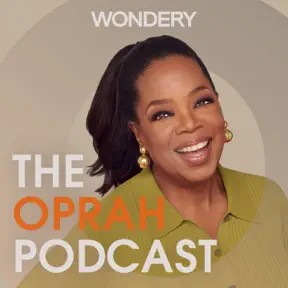
The Financial Mistake We Keep Making and How to Stop
The Oprah Podcast
August 25, 2026
BUY THE BOOK! '1929: Inside the Greatest Crash in Wall Street History--and How It Shattered a Nation' by Andrew Ross Sorkin Are we headed for a financial crash like the one in 1929?
Speakers Oprah Winfrey, Andrew Ross Sorkin
TopicsSociety & Culture
Oprah Winfrey (0:00)
What stays with me is not just the collapse of a market, it was the collapse of awareness.
Andrew Ross Sorkin (0:05)
I wanted to tell the drama, I wanted to tell the soap opera of what actually happened in 1929
Oprah Winfrey (0:11)
So many lessons, I thought, that parallel where we are now, that's why for me it felt like looking in a mirror. After doing all this exhaustive research, you concluded that America would have been better off if women had been in charge. Yes.
Andrew Ross Sorkin (0:27)
This is true. Women outperform men as investors, and women outperform men, especially in a crisis.
Oprah Winfrey (0:37)
You said, I can't tell you when and I can't tell you how deep, but I can assure you that we will have a crash.
Andrew Ross Sorkin (0:42)
We will always have a crash.
Oprah Winfrey (0:46)
Hi there, everybody. I'm so happy to welcome you to The Oprah Podcast. My guest is somebody who is well known for helping us understand the power of money, the forces that control it, and why it matters. And I know money matters to all of us. So Andrew Ross Sorkin is a best selling author. He is a financial columnist. He is founder of Deal Book for The New York Times and co-anchor of Squawk Box on CNBC, where he reports on the most crucial business news of the day. So I have to say, you're a multi-hyphenate. You are.
Andrew Ross Sorkin (1:24)
Is a hyphenate or a slash?
Oprah Winfrey (1:25)
No, it's a multi-hyphenate. You are.
Andrew Ross Sorkin (1:27)
What are you? You're a multi-hyphenate.
Oprah Winfrey (1:29)
Well, you know what? I don't know finance the way you do it. I will have to say this, that when I saw your book, 1929, Inside the Greatest Crash in Wall Street History, and how it shattered a nation. So when I saw that this immediately went to number one on The New York Times bestseller, I was so happy for you.
Andrew Ross Sorkin (1:50)
Thank you.
Oprah Winfrey (1:50)
Really, so happy for you. And I thought, yeah, I'm really happy for him, but I don't know if I can read that book.
Oh, no. And then I got the book and I thought it's like over 500 pages. I don't know if I can read that book. But let me tell you, this isn't just, I don't, it doesn't feel like you're just looking back words. It feels like you're looking in a mirror when you're reading this book. I think you did such an excellent job of creating something that feels like novel but is really social history and brings us so much information. What stays with me is not just the collapse of a market, but it was the collapse of awareness. How are you able to do this?
Andrew Ross Sorkin (2:36)
Well, it took eight years. It took eight years. It took eight years. That's one of the ways I was able to do it.
Oprah Winfrey (2:41)
Yeah.
Andrew Ross Sorkin (2:41)
I wanted to tell the drama. I wanted to tell the soap opera of what actually happened in 1929
Oprah Winfrey (2:46)
I can't wait to see the movie.
Andrew Ross Sorkin (2:49)
Because we had all heard that something very terrible happened in 1929 It's always our reference point for what we think a financial calamity would be.
Oprah Winfrey (2:58)
Right.
Andrew Ross Sorkin (2:59)
People used to ask me about it all the time after I wrote Too Big to Fail.
Oprah Winfrey (3:02)
Yes.
Andrew Ross Sorkin (3:03)
I never had a good answer for them about what had happened. I went on this journey to try to find through memos and letters and notes and transcripts who these people were and what was motivating them and what was incentivizing them and that they were the most colorful, interesting personalities and so many of them mirror so many of the personalities that we read about today.
Oprah Winfrey (3:25)
I know. That's why this is not just a story about money, it's a story about human nature and all the hubris and egos on full display, what people were thinking at the time.
For the first time, I understand why the roaring 20s were so roaring. I mean, people were like giddy.
Andrew Ross Sorkin (3:45)
The phrase FOMO didn't exist in the 1920s, but it could have. I mean, that was what was driving so much of it. Everybody was watching everybody else get rich, and everybody else was like, I got to get in. The train is leaving the station. If I don't get on, I'm going to miss it. And of course, everybody got on the train just when it was going over the cliff.
40 more minutes of transcript below
Thousands of transcripts fetched by people building searchable podcast archives
Fetch the whole transcript
The demo key returns a sample episode in full, no card needed:
curl -H "x-api-key: pt_demo" \
  https://spoken.md/transcripts/1000651996090
Markdown with the speakers named, for your notes, your knowledge base, or anything that makes HTTP calls.
From $0.10 per transcript. No subscription. Credits never expire. Prices exclude VAT, added at checkout for EU customers. Not what you expected? Email us within 14 days with 20 or fewer credits used and we refund the pack in full.
Using your own key:
curl -H "x-api-key: YOUR_KEY" \
  https://spoken.md/transcripts/1000785710156