How ending TPS is squeezing workers, businesses and (soon) consumers
The Indicator from Planet Money
August 5, 2026
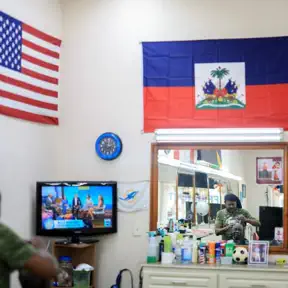
What happens when roughly a million people working legally in the U.S. suddenly lose that right to stay here? We’re starting to find out in places like Miami, Florida, home to one of the largest Haitian communities in the country.
Speakers Adrian Ma, Ricky Mulvey, Sabine Dulcio, Alex Arnon, Steve Puryear
TopicsBusiness
Adrian Ma (0:01)
NPR.
What happens when roughly a million people working legally in the US suddenly lose the right to stay here? That is what we're in the process of finding out.
Ricky Mulvey (0:16)
The Trump administration is dismantling temporary protected status, or TPS. It's a humanitarian designation that protects certain foreign nationals, regardless of immigration status, from deportation, because their home country isn't safe.
Adrian Ma (0:31)
At the start of Trump's second term, 17 countries were covered by TPS.
Ricky Mulvey (0:36)
Since then, the administration has terminated, or tried to terminate, 13 of them.
Adrian Ma (0:41)
And by the end of this year, the number of countries covered by TPS might be zero.
This is The Indicator from Planet Money. I'm Adrian Ma.
Ricky Mulvey (0:50)
And I'm Ricky Mulvey. What does terminating TPS mean for people's lives, their livelihoods, and the US economy?
Adrian Ma (0:57)
Today on the show, we'll find out by looking to Florida, home to more Haitian TPS holders than any other state.
North Miami is home to one of the largest communities of Haitians in the US. Sabine Dulcio lives nearby, and she says normally it's a hub of activity.
Sabine Dulcio (1:16)
What you would normally see are parents walking their kids to school. Or if you drive down Sixth Avenue, there's a bunch of markets. People walking from their home to the markets. There's a lot of food trucks.
So you'll see a lot of people buying food.
Ricky Mulvey (1:33)
But that changed after the Trump administration officially terminated temporary protected status for more than 300,000 Haitians living in the US. It cited national security concerns and that the program was meant to be temporary, not permanent. As local immigration enforcement ramped up in Miami, the fallout was all over the local news.
SPEAKER_4 (1:53)
ICE is getting ready to ramp up operations, targeting some in the Haitian community who business owners in Haitian neighborhoods say they're struggling for two reasons, lack of workers and lack of customers.
Sabine Dulcio (2:05)
We drove through six hours and I was like, huh, I was like, where is everybody? People are staying within their homes and not leaving for safety reasons.
Adrian Ma (2:16)
Sabine is originally from Haiti and became a US citizen about 10 years ago.
Today, she runs a wedding and event planning business. She says more than a dozen of her employees were Haitian TPS holders, who mostly worked setting up and breaking down events.
Sabine Dulcio (2:32)
We were proud that they were Haitian immigrants who were building a new life here, who were attending school to learn English. We had people who had started Miami-Dade College, and we were proud to say that our staff were able to help people do that by paying them a livable wage.
Ricky Mulvey (2:50)
But after TPS ended, Sabine had no choice but to lay them off. Without TPS, they're not legally authorized to work, and now they're also vulnerable to arrest and deportation.
Sabine Dulcio (3:01)
It's just like a big knot in my stomach, because I can put myself in their shoes, right? If I never went through the process of becoming a citizen, I might be in their shoes, planning to go back to a country that I do not know.
Adrian Ma (3:18)
And that country has been through a lot in recent years. In 2010, it was hit by a magnitude 7 earthquake. That's when the Obama administration first designated TPS for Haitians. Since then, that designation has been extended several times to account for new crises. In 2016, Haiti was hit by a massive hurricane, and in 2021, Haiti's president was assassinated, setting the stage for a collapse of the central government.
For many of its 12 million residents, gang violence, hunger, and a lack of access to basic infrastructure has become a part of everyday life.
Sabine Dulcio (3:53)
They left for a reason, you know? So now to have to go back and kind of figure it out, it breaks my heart.
Adrian Ma (4:05)
It's worth noting that it's not just Haitians who benefit from TPS. When Trump took office, about 1.3 million people had temporary protected status. From countries like Venezuela, Syria, Ukraine, and Sudan. And about a million of them were working.
But during his second term, Trump has moved to end these protections.
Ricky Mulvey (4:25)
Alex Arnon is a Director of Policy Analysis at the Penn-Warton Budget Model, an economic think tank. He says what is happening here from a labor market perspective is kind of unprecedented.
Alex Arnon (4:36)
It's pretty dramatic. So we've definitely, on, you know, on immigration, it's hard to think of a precedent for this, where, you know, yeah, roughly close to a million workers suddenly becoming ineligible to work.
4 more minutes of transcript below
Thousands of transcripts fetched by people building searchable podcast archives
Fetch the whole transcript
The demo key returns a sample episode in full, no card needed:
curl -H "x-api-key: pt_demo" \
  https://spoken.md/transcripts/1000651996090
Markdown with the speakers named, for your notes, your knowledge base, or anything that makes HTTP calls.
From $0.10 per transcript. No subscription. Credits never expire. Prices exclude VAT, added at checkout for EU customers. Not what you expected? Email us within 14 days with 20 or fewer credits used and we refund the pack in full.
Using your own key:
curl -H "x-api-key: YOUR_KEY" \
  https://spoken.md/transcripts/1000779957469