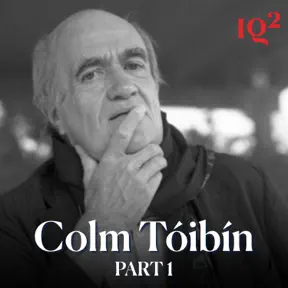
Colm Tóibín on Stories of Exile (Part One)
Intelligence Squared
August 13, 2026
Colm Tóibín is widely acclaimed for the emotional restraint and quiet power of his prose. His writing explores exile, abandonment, loss and denial, the things that go unspoken and the feelings not acted upon.
Speakers Mia Sorrenti, Emma Brockes, Colm Tóibín, Michelle Doyle
TopicsSociety & CultureArts
Mia Sorrenti (0:00)
Hello, Intelligence Squared members, senior producer Mia Sorrenti here. Today's members' episode is the full recording of our recent live event with award-winning novelist Colm Tóibín.
His novels include Nora Webster, Brooklyn, which was turned into a film starring Saoirse Ronan and its sequel, Long Island. Tóibín joined us at Union Chapel to discuss fiction, memory and the lives shaped by migration and loss. Marking the publication of his new short story collection, The News From Dublin, Tóibín reflects on quiet dramas that define ordinary lives, from grief and exile to belonging and home. He also discusses the enduring themes that have shaped his work and how fiction can illuminate moments of profound historical change through deeply personal stories. Let's join our host, Emma Brockes, now live at Union Chapel.
Emma Brockes (0:52)
Hello. Thanks very much for braving the storms to come out here tonight. I'm thrilled to be here with Colm Tóibín.
He is the author of 11 novels, including The Master, which is about Henry James, The Magician, about Thomas Mann, and his global bestsellers Brooklyn and its follow-up, Long Island. His work has been shortlisted for the Booker Prize three times. He has won many prestigious awards, including the Costa Novel Award and the David Cohen Prize for Literature. He is here tonight to discuss The News From Dublin, a new collection of short stories. The order of events loosely is that he and I will have a chat. He will do a reading from one of the stories. We will have a bit more of a chat, and then we will throw the floor open to you guys for questions. The nine stories in the book are set in Ireland, Spain, Argentina and America, all of which you have lived in.
They explore the recurring themes from his work, including silence, loss, exile, ambivalence. The thing I think of most pressingly in relation to Colm, which is the experience of being stuck in the wrong life, which always strikes fear into my soul in all the iterations across all your work. It's his first collection of short stories in 15 years. Colm, welcome.
Colm Tóibín (2:19)
Thank you very much. Thank you.
Emma Brockes (2:28)
So we'll get into the nitty gritty of the stories in a minute. I had a first question which harked back to the last time you and I met, which was in 2018 in your office at Columbia University in New York. Trump was in the White House. Brexit had just been voted through, but it was a gentler time, incredibly.
Since then, the world has spun off its axis. I wondered whether you ever have to persuade yourself that writing fiction in general and short stories in particular, given that they turn on tiny nuances in a world that's on fire, whether you have to ever persuade yourself that it makes a difference, that it's a reasonable thing to be doing in these insane times.
Colm Tóibín (3:18)
You mean that if I wrote a better short story, Trump would lose the midterms even more? Yes.
I think you really would be deluding yourself. What's really strange in America now is the ordinariness of things. It's everyone's carrying on that the worst thing could happen that day, and you would meet people that evening and nobody would mention it. That I have been with this book, I've been around the place, I've been in Nashville. I've been in Santa Fe.
You could think America is the nicest place on God's earth. They got this beautiful country, and they just are so charming as people. They've read so many books, they're just so brilliant. Until you read the news, where are the other people? Where is Mitch McConnell when I need him in the audience? There's something going on which we all need to know, I think, about creeping fascism, is that people become really skilled, including me, at ignoring it. I'm pretending it's just another day. And someone said, well, do you know they have concentration camps? You know, someone who's in one of those camps, who's Irish, who was detained for being illegal, came on Irish radio and said, just in the afternoon, one afternoon, the real problem here is that you're afraid of being beaten to death by the guards. They go, what did he just say? And then you think, well, what am I doing about that? And the answer is nothing.
And this goes on another day and another day. And so if you thought, oh, I'll write a story that will help things. I mean, I really would be the end. So in other words, this is another example of how life tries to go on against all this.
Emma Brockes (5:01)
74 more minutes of transcript below
Thousands of transcripts fetched by people building searchable podcast archives
Fetch the whole transcript
The demo key returns a sample episode in full, no card needed:
curl -H "x-api-key: pt_demo" \
  https://spoken.md/transcripts/1000651996090
Markdown with the speakers named, for your notes, your knowledge base, or anything that makes HTTP calls.
From $0.10 per transcript. No subscription. Credits never expire. Prices exclude VAT, added at checkout for EU customers. Not what you expected? Email us within 14 days with 20 or fewer credits used and we refund the pack in full.
Using your own key:
curl -H "x-api-key: YOUR_KEY" \
  https://spoken.md/transcripts/1000778953076