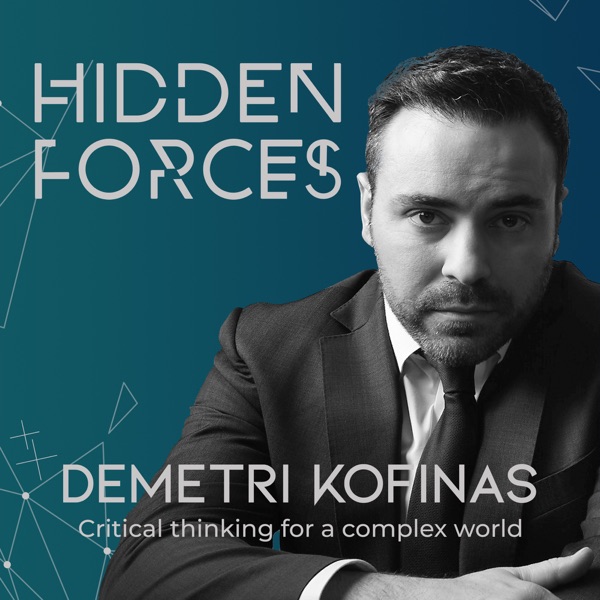
End of the Iran War: a New Balance of Power in the Middle East | Hamidreza Azizi
Hidden Forces
June 18, 2026
**Demetri Kofinas** (0:00)
What's up, everybody? My name is Demetri Kofinas, and you're listening to Hidden Forces, a podcast that inspires investors, entrepreneurs, and everyday citizens to challenge consensus narratives and learn how to think critically about the systems of power shaping our world. My guest in this episode of Hidden Forces is Hamidreza Azizi, an expert on Iranian foreign policy and the author of The Axis of Resistance, Iran, Israel, and the Struggle for the Middle East. We spent the first hour of our conversation today picking up where Hamidreza and I left off when he was last on the podcast, only a few weeks into the commencement of Operation Epic Fury. We discussed the transformation of Iran's governance structure following the assassination of its supreme leader, Ali Khamenei, the contours of the memorandum of understanding signed between the United States and Iran, and how it compares to the JCPOA signed by Obama in 2015, the question of whether Iran still needs a nuclear weapon at all, or whether demonstrated control over the Strait of Hormuz has become its functional equivalent, the role of Hezbollah and Lebanon as the most volatile variable in any lasting peace arrangement, and an honest accounting of what Iran has lost in this war, and why those losses, not just its leverage, are what have driven Tehran to the negotiating table.
The second hour turns to the broader regional and geopolitical consequences of what has transpired over the last few months. We deepen our discussion about the changing nature of the Iranian regime and what that means for its relationship with the United States and other countries in the region before moving to a series of conversations about Israel, the Gulf States, Saudi Arabia, and China. We discuss Netanyahu's political future, the future of the US-Israeli alliance, the implications for Saudi Arabia and other Gulf states, along with their financial inflows and their attractiveness as destinations for wealthy expats and human capital, and conclude with a discussion about China, its ambitions across its western horizon, and whether a peace agreement between the US and Iran is truly a strategic defeat for the United States, or if in fact it may herald a new era of political and geostrategic realignment in the Middle East that could prove to be more stabilizing and less violent than what we have learned to live with in recent decades. If you want access to all of this conversation, go to hiddenforces.io/subscribe and join our premium feed, which you can listen to on your mobile device using your favorite podcast app, just like you're listening to this episode right now. If you want to join in on the conversation, become a member of the Hidden Forces Genius Community, which includes Q&A calls with guests, discounted access to third party research and analysis, and in-person events like our intimate dinners and weekend retreats. You can also do that on our subscriber page. If you still have questions, feel free to send an email to info at hiddenforces.io, and I or someone from our team will get right back to you. With that, please enjoy this incredibly comprehensive and timely conversation with my guest, Hamidreza Azizi.
Hamidreza Azizi, welcome back to Hidden Forces.

**Hamidreza Azizi** (3:19)
Thank you for inviting me again. It's a pleasure joining you.

**Demetri Kofinas** (3:23)
I'm excited to have you back on the program. So I'd like to begin this conversation by broadening the context to include our last discussion when you were first on the podcast, which was almost three weeks into the commencement of Operation Epic Fury and which came three weeks before Trump, some may remember, announced that he had achieved total and complete victory following the ceasefire deal with Iran that immediately fell apart and which led to seemingly unending series of dubious and contradictory statements from the White House about the imminence of a new deal and all sorts of other confusing statements. At that time, Iran was still targeting Gulf infrastructure, including US military bases, signaling its commitment to fighting what appeared at that time at least to be an open ended war of attrition.
Looking back on that conversation in the context of everything that has transpired over the last three months, how did your expectations then match up with how negotiations have progressed since and the way in which this war of attrition has unfolded?

**Hamidreza Azizi** (4:32)
Well, I think the counters of what we have seen over the past few weeks after the cessation of active warfare and during the ceasefire was already evidence when we were discussing, because I remember that we discussed the reasons actually for the start of the war and the expectations on the side of the US and Israel of a very quick and decisive victory. But three weeks into the war, it was, I think, already clear that things were going differently and not as expected by President Trump and also Benjamin Netanyahu.
39 more minutes of transcript below
Try it now — copy, paste, done:
curl -H "x-api-key: pt_demo" \
  https://spoken.md/transcripts/1000651996090
Works with Claude, ChatGPT, Cursor, and any agent that makes HTTP calls.
From $0.10 per transcript. No subscription. Credits never expire.
Using your own key:
curl -H "x-api-key: YOUR_KEY" \
  https://spoken.md/transcripts/1000773277199